When it comes to buying property in the UAE, especially in Dubai, understanding the difference between freehold and leasehold ownership is crucial. These terms define the type of rights a buyer gets and impact long-term investment, resale, and inheritance.
Both options are available to expatriates and locals, but the ownership structure, location, and duration of rights vary greatly.
What Is Freehold Property in the UAE?
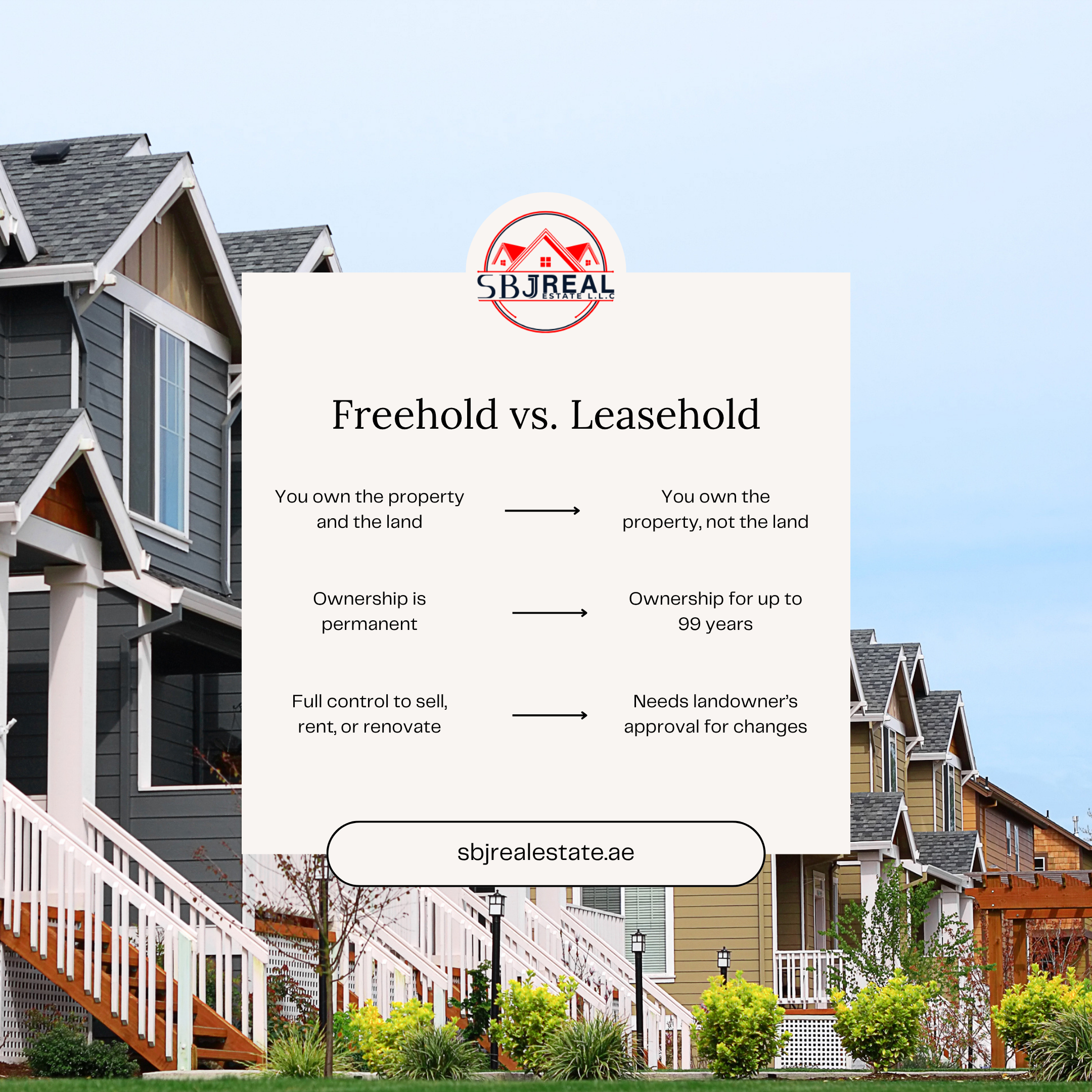
Freehold property ownership means you have complete ownership of the property and the land it stands on. This type of ownership is perpetual, and you can sell, lease, or pass it on to heirs without restrictions.
✅ Key Features:
Full ownership of unit and land
No time limit on ownership
Available in designated freehold areas
Buyer’s name registered with the Dubai Land Department (DLD)
Eligible for long-term residency visa (Golden Visa)
✅ Popular Freehold Areas in Dubai:
Downtown Dubai
Business Bay
Dubai Marina
Jumeirah Village Circle (JVC)
Meydan
Emaar South
Dubai Hills Estate
What Is Leasehold Property in the UAE?
Leasehold means the buyer obtains rights to the property for a fixed term, usually up to 99 years. The land ownership remains with the freeholder (landowner), and the buyer is essentially a long-term tenant with specific rights and obligations.
✅ Key Features:
Ownership rights for a limited time (e.g., 30–99 years)
No ownership of the land
Typically more affordable than freehold
May include annual ground rent
Renewal terms depend on the lease agreement
✅ Common Leasehold Areas in Dubai:
Dubai Silicon Oasis
Green Community
Dubai Festival City
Motor City (some developments)
Mirdif (some zones)
Legal Framework and Registration
In Dubai, all real estate transactions-whether freehold or leasehold-are governed by the Dubai Land Department (DLD) and Real Estate Regulatory Agency (RERA).
Freehold title deeds are registered in the buyer’s name.
Leasehold contracts are registered and recorded in Ejari and the DLD system.
Pros & Cons Comparison Table
Feature
Freehold
Leasehold
Ownership Duration
Permanent
Fixed term (30–99 years)
Land Ownership
Yes
No
Price
Higher upfront
Usually more affordable
Maintenance Rights
Full control
Limited (depends on lease terms)
Resale Value
Higher in the long run
May depreciate as lease shortens
Visa Eligibility
Yes (AED 2M+ for Golden Visa)
Sometimes, depending on lease type
Which One Is Right for You?
Choose Freehold If:
You're an investor looking for long-term capital appreciation
You want full rights to alter, rent, or resell your property
You're applying for UAE long-term residency via property ownership
Choose Leasehold If:
You prefer a lower-cost entry into Dubai’s property market
You're planning a short- to mid-term stay
You're looking at specific communities not available for freehold
SBJ Real Estate Expert Opinion
“Most expats prefer freehold zones for their flexibility and long-term benefits, especially with Dubai’s consistent capital appreciation. However, leasehold options can offer exceptional value if the community fits the lifestyle and budget.” - SBJ Real Estate Team
Final Thoughts: Freehold vs Leasehold in Dubai
In Dubai’s ever-evolving property market, both freehold and leasehold properties serve different buyer profiles. Understanding the ownership rights, community planning, and legal structure helps ensure your investment aligns with your goals.
At SBJ Real Estate, we help you choose wisely between both models, whether you’re a first-time buyer or a seasoned investor.
With Dubai embracing digital currencies, buying property with crypto has become a reality in 2025. Here’s what investors need to know - legal status, payment flow, risks, and benefits of using cryptocurrency for real estate in the UAE.
As global markets face rising taxes and stricter regulations, investors are turning to Dubai for its tax-free returns, high rental yields, and long-term residency benefits. See how Dubai compares to London, New York, and Singapore in 2025’s real estate race.


 Buying Property in Dubai with Cryptocurrency: What Investors Need to Know in 2025
 Dubai Real Estate Market Mid-Year Report 2025: Trends, Prices & Forecasts
 Dubai Real Estate vs. Global Markets: Why Investors Are Choosing the UAE in 2025
 A Second Home in Dubai: Why Investors Are Turning to Luxury Properties
 Is Commercial Real Estate in Dubai a Good Investment in 2025?